
Canonized saint
St. Damien of Molokai
Priest among people exiled with Hansen's disease
A Belgian missionary who volunteered for the quarantine settlement on Molokaʻi, stayed sixteen years, contracted the disease himself, and kept working.
- Dates
- 3 January 1840 – 15 April 1889
- Feast day
- 10 May
- Places
- Tremelo, Belgium · Kalaupapa and Kalawao, Molokaʻi, Hawaii
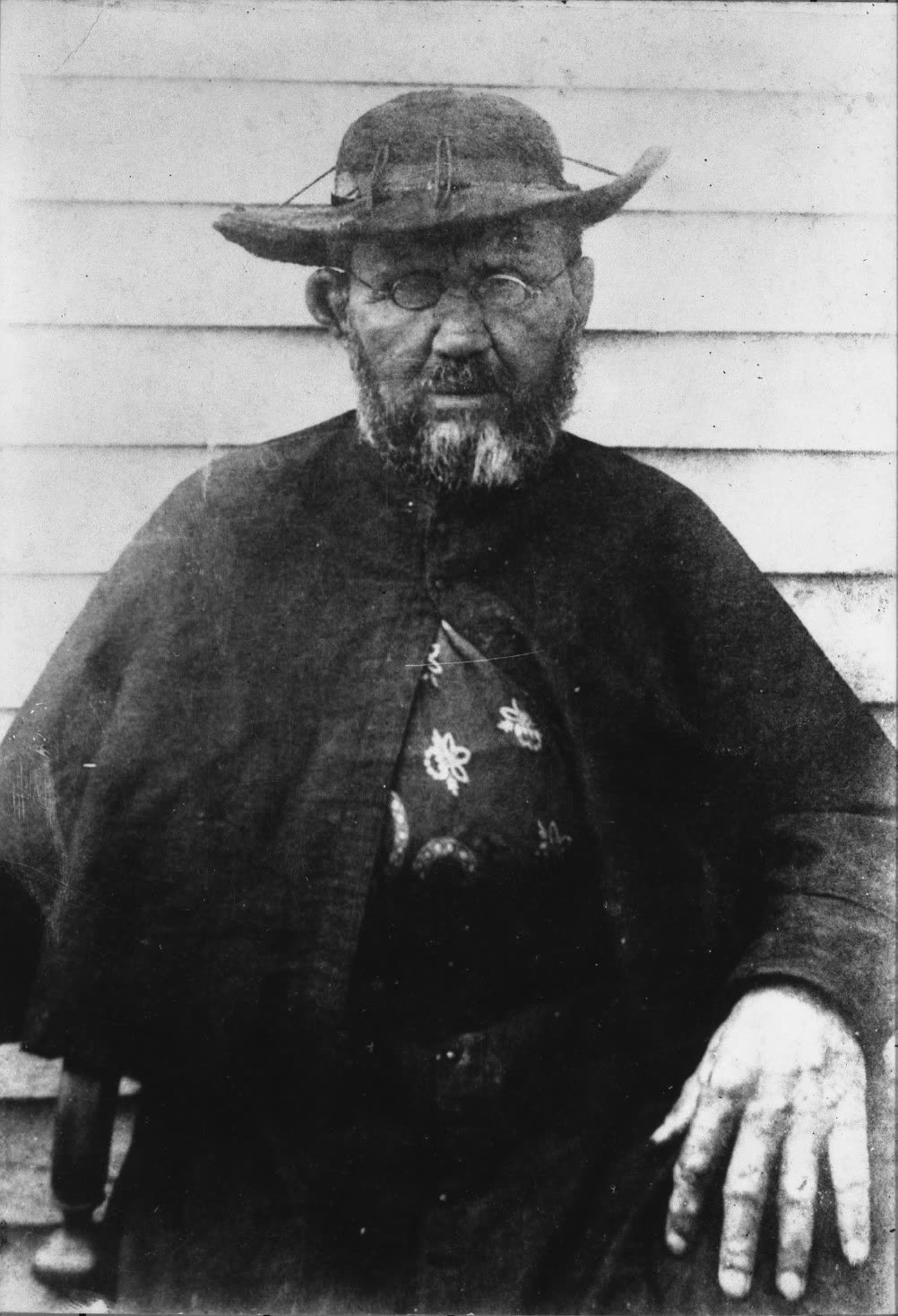
Artwork information
Title: Photograph of Fr. Damien de Veuster
Artist: William Brigham
Date: 1889
Rights: Public domain
Patronage
- People with Hansen's disease
- Outcasts
- Hawaii
Symbols
- A wooden church
- A pipe
- A bandaged hand
Key virtues
- Solidarity
- Practical skill
- Persistence with authorities
Lived experience
- Contagious illness
- Isolation
- Conflict with superiors
- Being feared
Causes served
- The sick
- Quarantined and excluded people
- Indigenous Hawaiians
When you need…
- A saint who stayed
- Solidarity in illness
- Company when people avoid you
Volunteering for the settlement
Jozef De Veuster was born in Belgium in 1840 and joined the Congregation of the Sacred Hearts of Jesus and Mary, taking the name Damien. He sailed for Hawaii in place of his brother, who had fallen ill, and was ordained in Honolulu in 1864.
The Kingdom of Hawaii, facing an epidemic of Hansen's disease among a population already devastated by introduced illnesses, forcibly relocated the sick to an isolated peninsula on the island of Molokaʻi. Families were separated by law. Damien volunteered to go in 1873.
Sixteen years
He built houses and coffins, dressed ulcers, organised water supply and farming, established schools and a choir, and pressed the government relentlessly for supplies and medical staff. He insisted on ordinary contact (eating with residents, sharing a pipe) at a time when contact was assumed to be dangerous.
He worked with, and often depended upon, Hawaiian residents of the settlement and later colleagues including St. Marianne Cope and Br. Joseph Dutton.
Illness and death
He contracted Hansen's disease, diagnosed in 1884, and continued working until his death on 15 April 1889 at the age of forty-nine.
He was canonised by Pope Benedict XVI in 2009. In Hawaii, the memory of the settlement is a matter of Native Hawaiian history and grief as much as Catholic devotion; his story is properly told alongside the residents' own.
Quarantine as policy
Forced isolation on Molokaʻi continued in law until the 1960s, long after effective treatment existed. Hansen's disease is now curable with multidrug therapy and is only mildly contagious.
The word 'leper' is avoided here: it names people by a disease and carries centuries of exclusion.
Scripture that runs alongside this life
Mark 1:40–45
And Jesus having compassion on him, stretched forth his hand; and touching him, saith to him: I will. Be thou made clean.
Translation: Douay-Rheims (public domain) · Short excerpt; full chapter linked.
Matthew 25:31–46
As long as you did it to one of these my least brethren, you did it to me.
Translation: Douay-Rheims (public domain) · Short excerpt; full passage linked.
Prayer
Original prayer written for this site
A prayer with St. Damien
St. Damien, you stayed where others would not come.
Pray with those who are avoided because of illness, and with those who care for them until it costs them something.
Amen.
Not a traditional prayer of the Church. You are never required to have a devotion to any particular saint: you may always pray directly to God.
How to ask this saint to pray with you
- 1.Ask him to pray for someone in long-term illness, and for the people looking after them.
Reflection
Solidarity is not the same as martyrdom-seeking. Damien asked for medicine, staff, and funding constantly; he did not romanticise the suffering there.
One actionIf you know someone whose illness has emptied their calendar, put a visit in yours.