
Christ among the rejected
Who did Jesus move toward?
Before this is a question about other people, it is a question about him. Jesus was born into poverty, carried across a border as a child because a ruler wanted him dead, raised in a town of no reputation, and executed as a condemned man. He knew the position of the people he approached from the inside.
We give the historical setting plainly: purity law, patronage, honour and shame, Roman occupation. We never invent quotations, doctrine, or details the Gospels do not give. Scripture is quoted as published; the reflections around it are ours.
He was there first
The rejection was his own before it was anyone else's
Jesus did not enter human life through wealth, safety, status, or political power. He was born to a poor family far from home and laid in a feeding trough because there was no room anywhere else. While he was still a small child his family fled the country because a ruler wanted him dead. He grew up in Nazareth, a town of no importance, in a province under Roman occupation.
He was rejected by many of his own people, watched by religious authorities, and finally handed over to an empire that tortured and executed him on a public charge. His friends ran. He died as a condemned man between two other condemned men.
- I
Born poor, laid in a feeding trough
Luke 2:1-7
Luke sets the birth inside an imperial census, which is to say inside a bureaucracy counting people for tax. Mary and Joseph are away from home, and the child is laid in a manger, the box animals eat from, because no room was available. The first people told are shepherds, night labourers whose testimony carried little weight. God's entry into the world is announced first to workers on a hillside.
- II
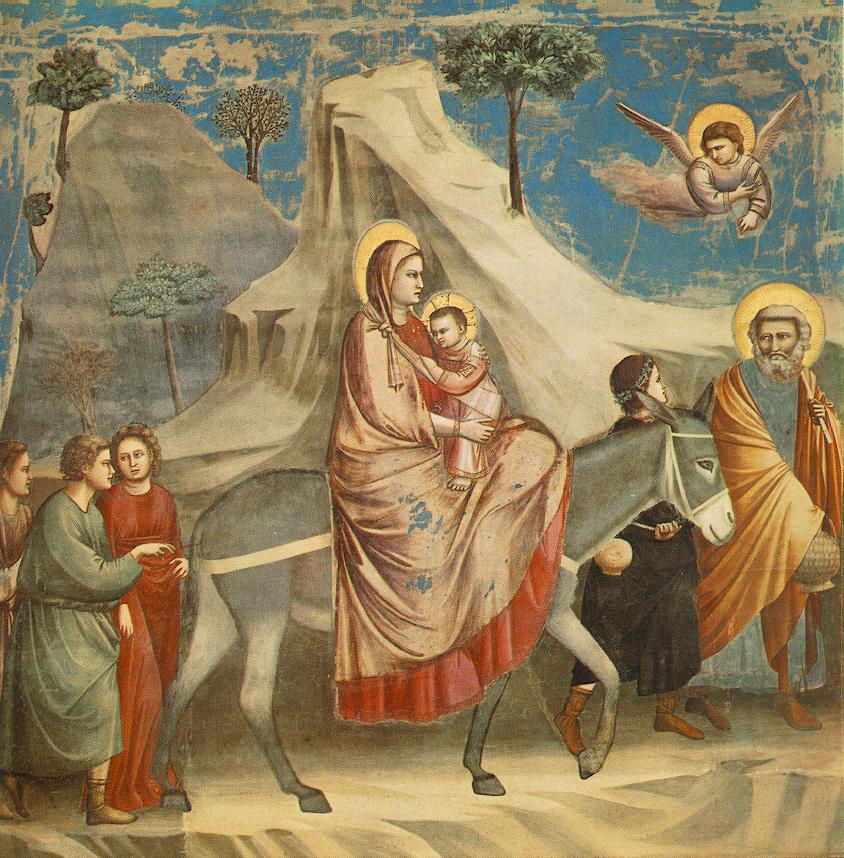
Taken into Egypt when his life was threatened
Matthew 2:13-15
Matthew records that Joseph took the child and his mother and left the country at night because Herod intended to kill him. Before Jesus could speak he was a child whose family crossed a border to keep him alive. Catholic teaching on migrants and refugees returns to this constantly, and not as a metaphor: the Holy Family were people who fled.
- III
Raised in a town no one expected anything from
John 1:45-46
He grew up in Nazareth in Galilee, a small place with no political or religious weight. John's Gospel preserves the contempt directly: "Can any thing of good come from Nazareth?" Jesus spent roughly thirty years of a short life in the kind of place and the kind of work that leaves no record. That obscurity is part of the revelation, not a delay before it.
- V
Falsely accused, condemned, and executed
Luke 23:13-25, Hebrews 13:3
He was arrested at night, tried on shifting charges, beaten by soldiers, and executed by the standard Roman method for rebels and slaves, between two condemned men, outside the city wall. He was, in the language of his own society, disgraced. The Letter to the Hebrews later tells Christians to remember prisoners as though they were in prison with them, which is only intelligible because their Lord had been one.
“Amen I say to you, as long as you did it to one of these my least brethren, you did it to me.”
Nine encounters, one pattern
Filter by who Jesus moved toward, or read them in order. Each one keeps the passage, its historical setting, who held power, what he did, and what it does not ask of a person in danger.
9 encounters shown.
- 01Mark 1:40-45He touched the man no one would touchA man with leprosyBefore he healed him, Jesus reached out and touched a man that purity law required everyone else to avoid.Read the encounter
- 02
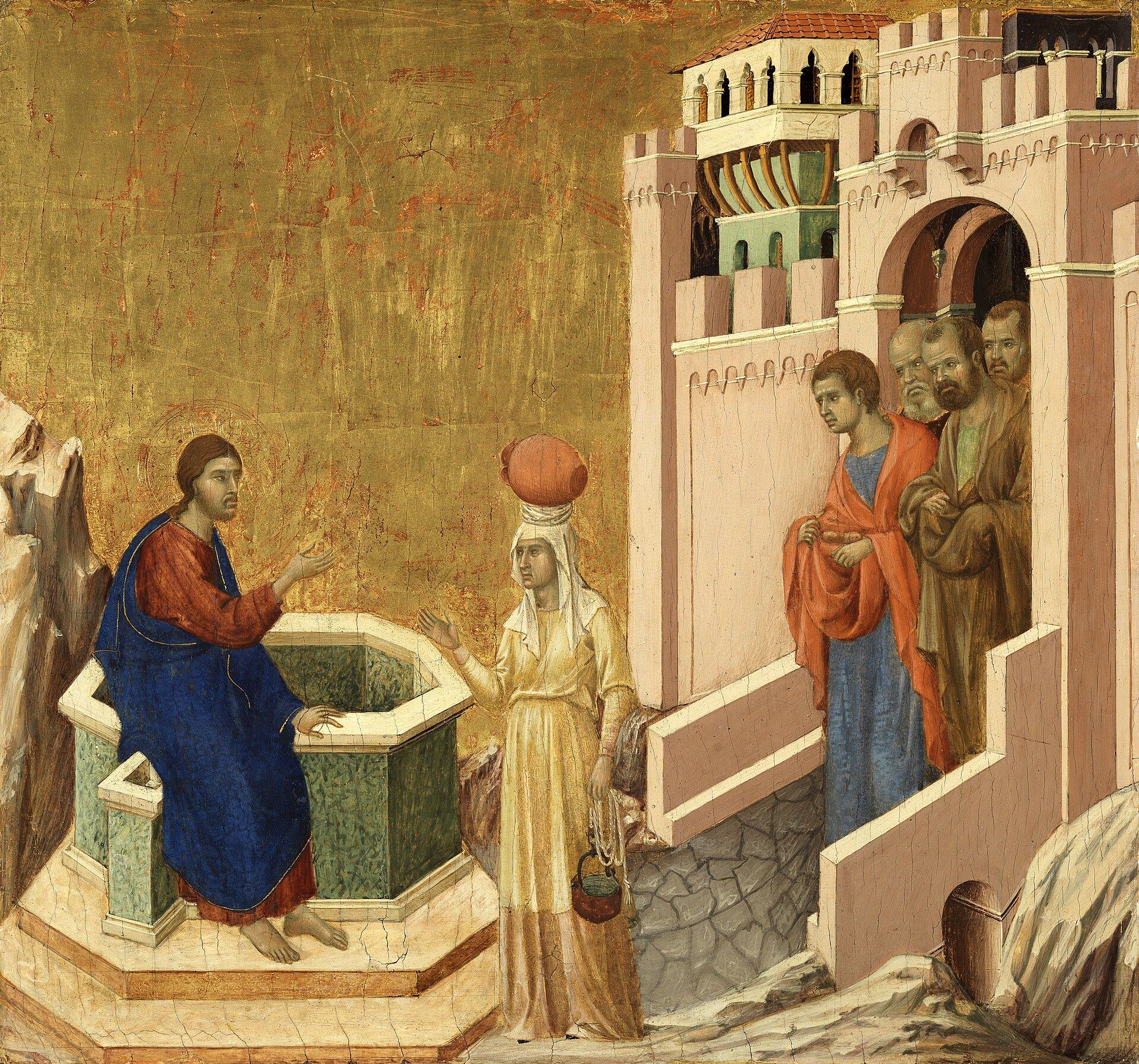 Christ and the Samaritan Woman. Duccio di Buoninsegna, c. 1310 to 1311.John 4:1-42He asked a rejected woman for helpA Samaritan womanThe longest recorded conversation Jesus has with anyone in the Gospels is with a woman her own town avoided.Read the encounter
 - 03
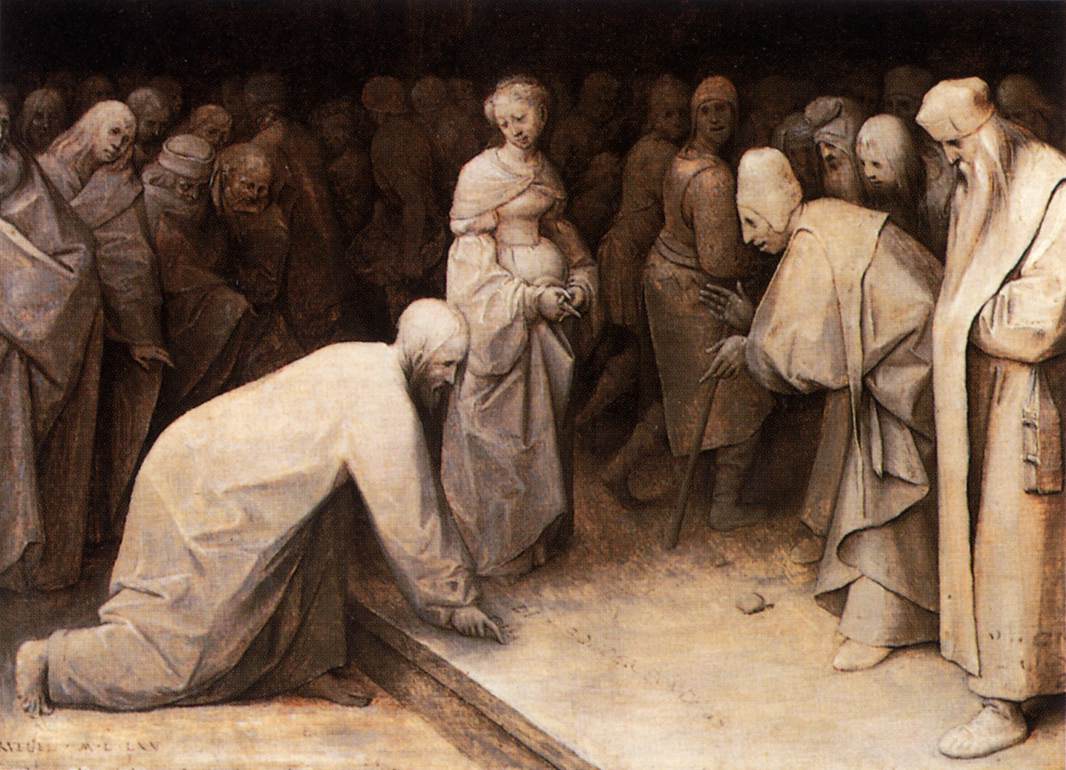 Christ and the Woman Taken in Adultery. Pieter Bruegel the Elder, 1565.John 7:53-8:11He would not add his stone to hersA woman accused of adulteryBrought to Jesus as a test case for stoning, she left with no accuser and one instruction: go, and sin no more.Read the encounter
 - 04Mark 2:1-12His friends took the roof offA paralysed man and his friendsFour friends could not get through the crowd, so they cut through a roof, and Jesus responded to their faith, not just his.Read the encounter
- 05
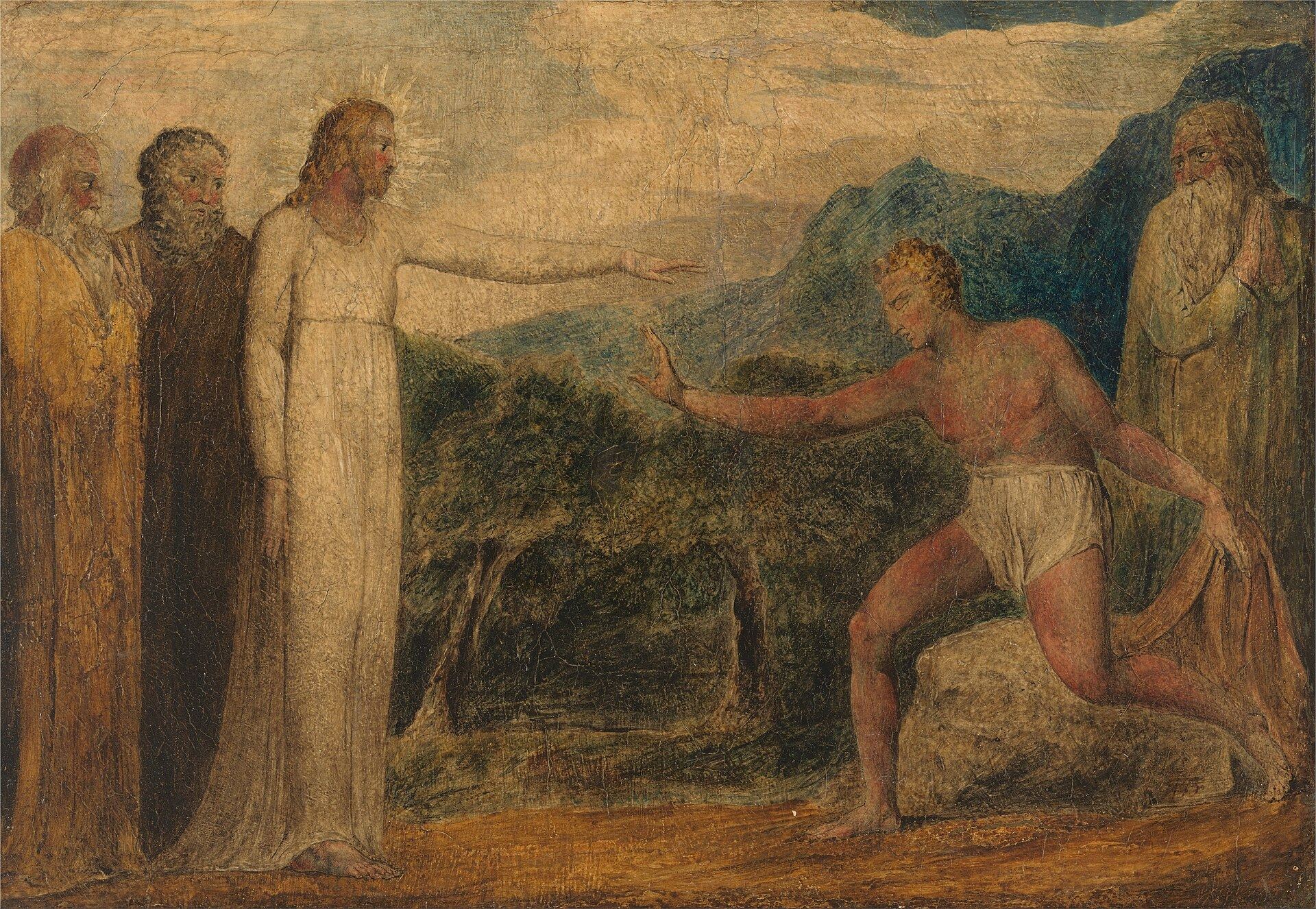 Christ Giving Sight to Bartimaeus. William Blake, c. 1799 to 1800.Mark 10:46-52He stopped for the man everyone told to be quietBartimaeus, a blind beggarThe crowd told him to be silent. Jesus stopped walking and told them to bring him over.Read the encounter
 - 06Luke 19:1-10He invited himself to the house of a hated manZacchaeus, a tax collectorZacchaeus climbed a tree to see Jesus out of curiosity. Jesus called him down by name and invited himself to dinner.Read the encounter
- 07Luke 7:11-17He stopped a funeralA grieving widowNo one asked Jesus to intervene. He saw a widow burying her only son, and could not walk past.Read the encounter
- 08Mark 10:13-16He was indignant at the people blocking the childrenChildrenThe disciples turned children away as an interruption. Jesus was indignant, and took them in his arms.Read the encounter
- 09
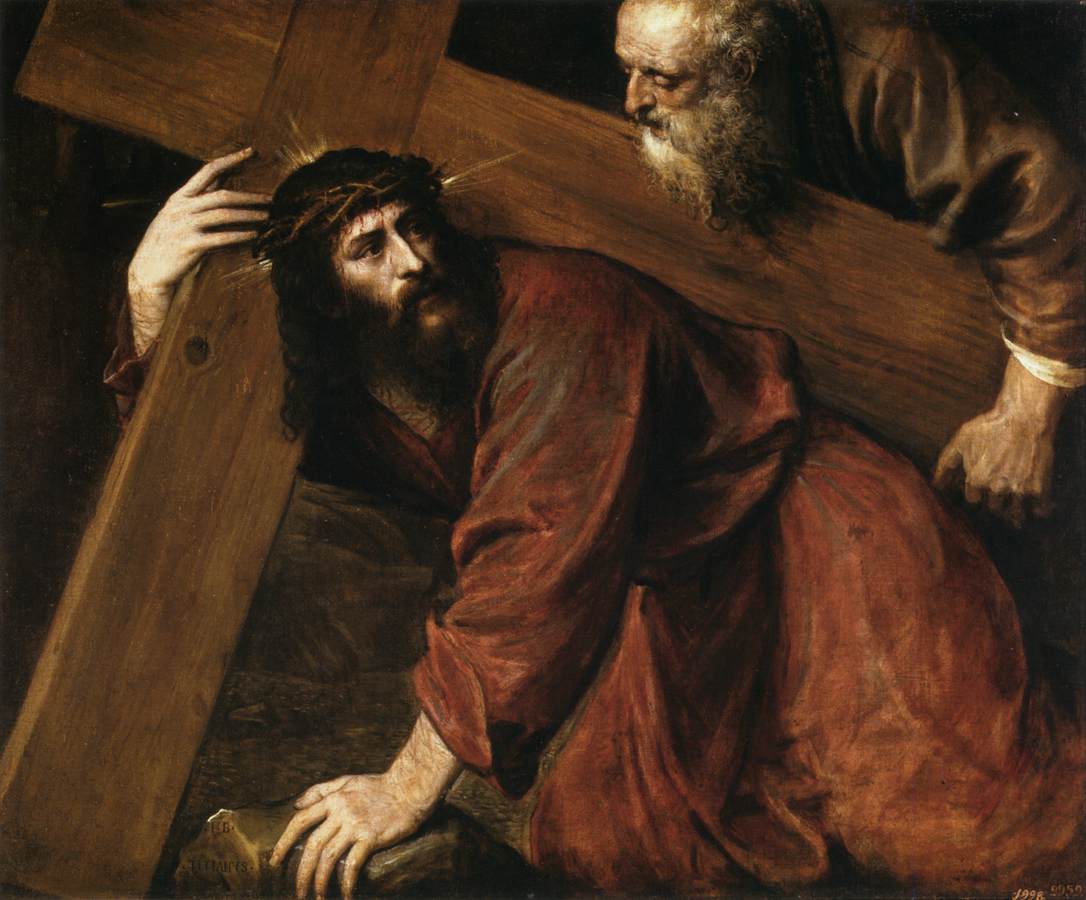 Christ Carrying the Cross. Titian (Tiziano Vecellio), c. 1565.Luke 23:39-43He promised paradise to a dying criminalA man condemned and crucified beside himWith nothing left to offer and no time left to prove anything, a condemned man asked to be remembered. Jesus promised him paradise that same day.Read the encounter
Read carefully
What these passages do not ask of you
- Poverty, trauma, disability, displacement, and oppression are not holy in themselves, and no one becomes closer to God by being harmed. The Church calls these things injustice and asks us to end them, not admire them.
- The Cross does not ask a survivor to stay within reach of someone who is hurting them. Christ carried his cross once, freely, toward a definite end. Being coerced, humiliated, or endangered by another person is not a cross given by God.
- Christ's solidarity with the vulnerable is not a political slogan or a programme of any party, and it is not a reduction of Jesus to a kind human teacher. It follows from the Incarnation, the Kingdom he announced, his death and Resurrection, and the doctrine that every person carries the image of God.
Ten of the saints in this library met homelessness, disability, addiction, migration, neglect, or the abuse of power by someone stronger. Their histories are told without pretending the harm was good for them.
Saints who knew the margins from the inside
- Open the collectionThirty-one lives, filtered by lived experience and cause
- St. Benedict Joseph LabreHomeless for most of his adult life, and turned away often
- St. Margaret of CastelloDisabled, abandoned by her family, taken in by neighbours
- St. Camillus de LellisRecovery from gambling, then reform of how the sick were treated