
Bartimaeus, a blind beggar
He stopped for the man everyone told to be quiet
The crowd told him to be silent. Jesus stopped walking and told them to bring him over.
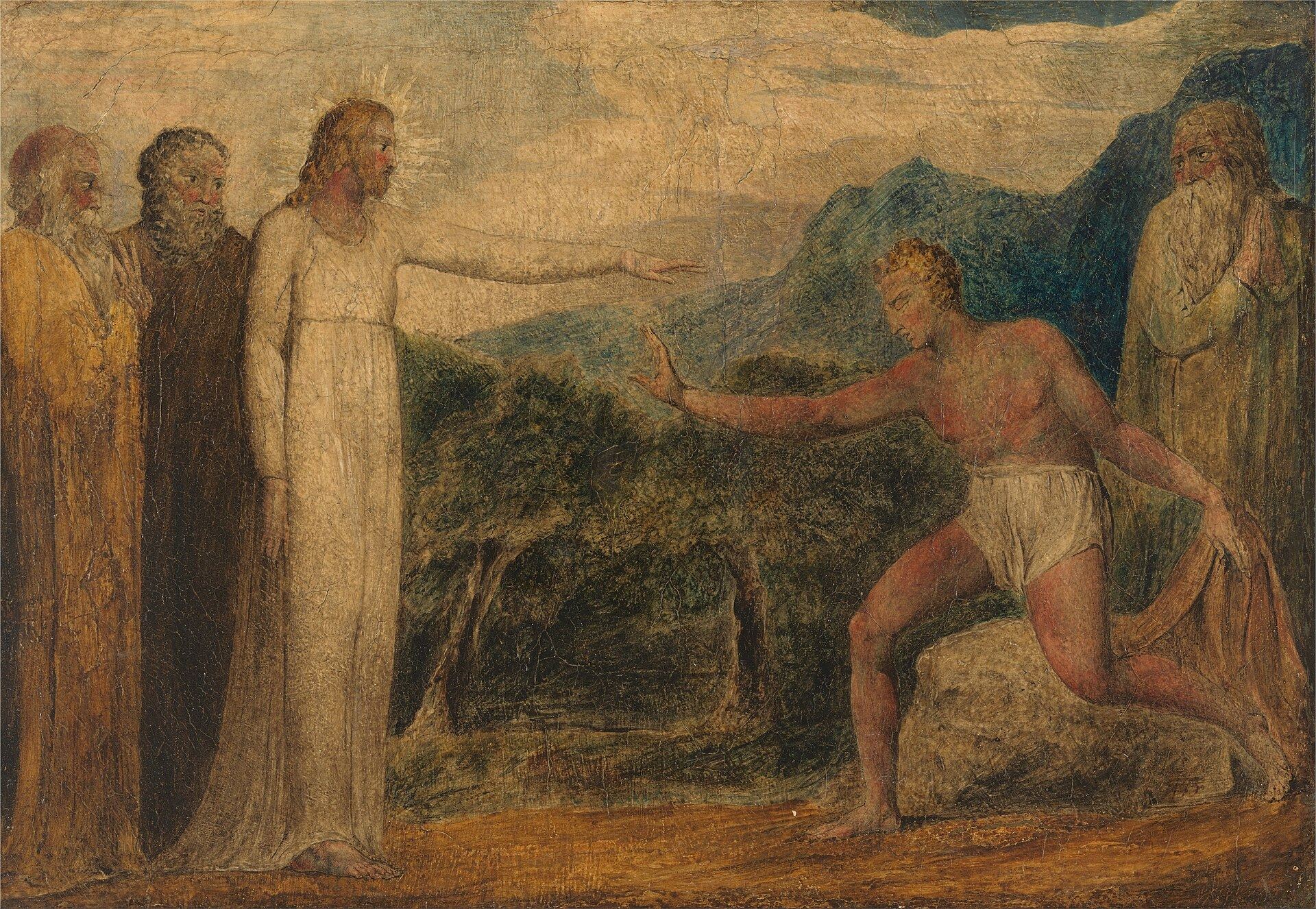
Christ Giving Sight to Bartimaeus, William Blake, c. 1799 to 1800.
Sacred art is used here for its theological meaning, never as decoration.
Artwork information
Title: Christ Giving Sight to Bartimaeus
Artist: William Blake
Date: c. 1799 to 1800
Rights: Public domain (copyright expired)
What happened
As Jesus was leaving Jericho with a large crowd, a blind beggar named Bartimaeus, sitting by the roadside, began shouting for Jesus to have mercy on him. Many in the crowd told him to be quiet, but he shouted louder. Jesus stopped, called him over, asked what he wanted, and restored his sight. Bartimaeus followed him on the road.
Historical & social context
Begging was one of the only options available to a person with a disabling condition like blindness in that economy, and roadside begging placed a person entirely at the mercy of passers-by, subject to being shooed away as a nuisance, especially around a public figure like Jesus. That Mark records his name (unusual for a minor figure in the Gospels) suggests he was known in the early Christian community.
Who held power
The crowd around Jesus, who acted as informal gatekeepers deciding who deserved his attention.
What Jesus did
He stopped moving. In a Gospel largely defined by Jesus travelling with urgency toward Jerusalem, this is a deliberate halt for one man the crowd wanted silenced. He then asked Bartimaeus what he wanted rather than assuming it.
Why it challenged exclusion
The crowd's instinct to quiet him reflected an ordinary social reflex: beggars are background noise, not participants. Jesus reversed the crowd's judgment and made Bartimaeus the center of attention.
Why it mattered
Bartimaeus is one of the few people healed by Jesus who is then said to follow him "on the way": the same phrase Mark uses for discipleship. His healing becomes a vocation, not just a private relief.
What we learn
Persistence in prayer in the face of people telling you to quiet down is not presumption. Jesus stops for exactly that kind of shouting.
What this passage does not ask of you
The Cross does not ask a survivor to stay within reach of someone who is hurting them. Christ carried his cross once, freely, toward a definite end. Being coerced, humiliated, or endangered by another person is not a cross given by God.
Christ moving toward a person who was suffering is never an instruction to that person to stay in reach of whoever is causing it. If you are in danger, safety comes first, and it is not a failure of faith.
Scripture
Mark 10:48-49
And many rebuked him, that he might hold his peace; but he cried a great deal the more: Son of David, have mercy on me. And Jesus, standing still, commanded him to be called.
Translation: Douay-Rheims (public domain) · Short excerpt; full chapter linked.
Reflection
Jesus asks him what he wants even though his blindness was obvious. Being asked, rather than assumed about, is itself part of the man's dignity being restored.
The crowd that once told him to be quiet is the same crowd Jesus was walking with. Proximity to Jesus does not automatically make people compassionate.
A prayer for persistence
Lord, when I am told to quiet down, give me Bartimaeus's stubbornness.
Stop for me the way you stopped for him.
Written for this site, not a traditional prayer of the Church.
A practical next step
- Consider one prayer you have stopped voicing because it felt like too much to ask.
- Notice whether you have ever been part of a crowd telling someone to quiet down, and reconsider.
- Volunteer or donate toward services for people who are blind or visually impaired in your community.