Skip to content
Are you in immediate danger?Get help now
Thorns & Light

Find Healing

After abortion: a Catholic place for mercy and healing

This page is for you, whatever brought you here and whatever you feel now. It is not a debate, an argument, or an examination.

You do not have to tell us what happened.

You are not required to defend your fear, trauma, or the danger you were in before you are allowed to seek God.

If someone forced, threatened, raped, abused, or controlled you, that violence was not your fault.

You are still made in the image of God. You have not been abandoned by Christ or placed beyond his mercy.

Get help now

Quick exit leaves this page immediately and opens a neutral search page. It cannot delete your browsing history: if someone may check your device, consider using a device they cannot access.

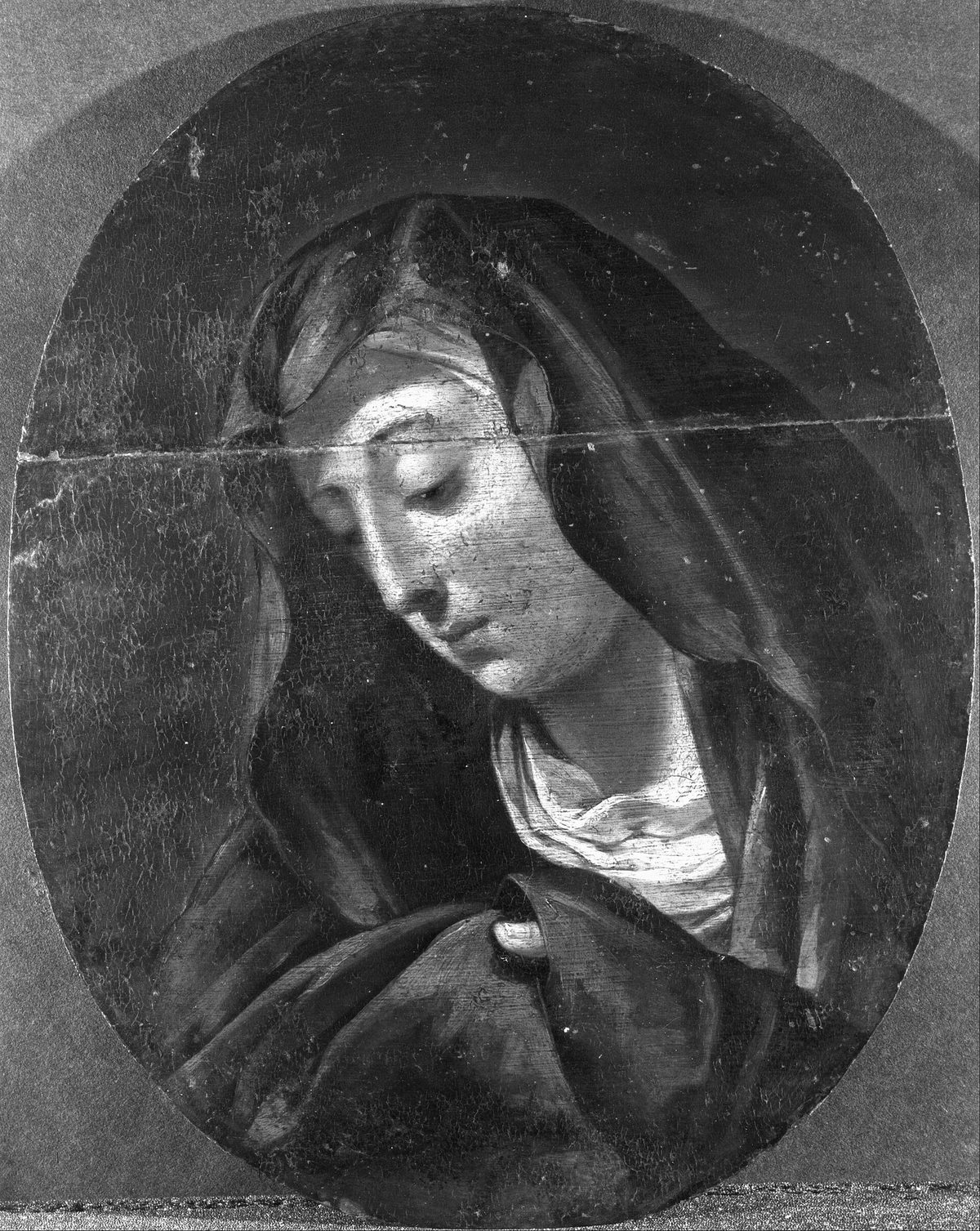
Painting of Mary in a deep blue veil, her head lowered and her hands folded quietly at her breast, grieving without any graphic detail.

Mater Dolorosa, Carlo Dolci, 17th century.

Mary is shown here in grief, not in judgment. Catholic tradition has always let her stand beside people who cannot speak yet.

Artwork information

Title: Mater Dolorosa

Artist: Carlo Dolci

Date: 17th century

Rights: Public domain (copyright expired)

Source record at Wikimedia Commons

What the Church teaches, without erasing what happened to you

Catholic teaching holds that direct abortion is a grave moral evil, and that the life of an unborn child carries the same God-given dignity as any other human life. That teaching is not softened here, and it is not what most people arrive on this page needing to be told.

The same tradition is equally serious about a second question, which is often left out. Catholic moral theology distinguishes the objective character of an act from the freedom, imputability, and responsibility of the person involved. Those are not the same question, and the Church has never taught that they are.

The Catechism states in article 1735 that imputability and responsibility for an action can be diminished, and can even be nullified, by ignorance, inadvertence, duress, fear, habit, inordinate attachments, and other psychological or social factors. Threats, violence, financial control, isolation, medical terror, and a person who made refusal impossible are not spiritual details to be brushed aside. They bear directly on freedom, and therefore on responsibility.

The Catechism also says in article 2356 that rape is intrinsically evil, that it violates justice and charity, that it wounds a person's right to respect, freedom, and physical and moral integrity, and that it can mark the victim for life. The Church places the guilt for that violence where it belongs, on the person who committed it.

Canon law follows the same logic. Canon 1321 holds that no one is punished unless the violation was gravely imputable by malice or culpability. Canons 1322 to 1324 recognize that a person lacking the use of reason commits no offence, and they exempt or lessen penalties in cases including grave fear, coercion, force, serious external pressure, ignorance of the penalty, and being under sixteen. Those conditions are not loopholes invented to be kind. They are in the law itself, and they apply to real situations that people actually live through.

This page does not and cannot tell you your personal culpability, whether any canonical penalty was ever incurred, or your sacramental status. No website can, and anyone online who tells you otherwise is overreaching. We do not declare automatic excommunication, we do not issue canonical rulings, and we would be wrong to try. Those questions deserve a confidential conversation with a compassionate, qualified priest or a diocesan contact who will hear the actual circumstances first.

Mixed feelings do not prove guilt, and they do not prove a lack of faith. Grief, numbness, relief, anger, and love can all be present in one person at once.

Where your story may be, in your own words

Each of these sections stands on its own. Read the one you came for, and leave the rest. Nothing is recorded and nothing is required of you.

01

I was forced or threatened

If you were threatened, restrained, deceived, drugged, blackmailed, transported, or given no way to refuse, then what happened to you was done to you.

You do not have to prove that the pressure was severe enough to count. You do not have to describe it to anyone here.

Being unable to stop something is not the same as choosing it.

What Catholic teaching actually distinguishes

Catholic moral theology has always distinguished the objective character of an act from the freedom of the person involved. The Catechism states plainly that responsibility can be diminished, and can even be nullified, by duress, fear, and other psychological or social factors. A person acting under threat is not in the same moral position as a person acting freely, and the Church does not pretend otherwise.

Scripture

The Lord is close to the brokenhearted, saves those whose spirit is crushed.

Psalm 34:18

New American Bible, Revised Edition, quoted as a short excerpt for study

Psalm 34 is a thanksgiving psalm attributed to David after escaping danger. The verse does not explain suffering or assign fault. It says where God is, which in this psalm is beside the person who has been crushed rather than above them in judgment.

Original prayer from Thorns & Light

A prayer when it was not your choice

God, I did not want this.

I could not stop what was happening, and I am still carrying it.

You know exactly what was done to me and by whom.

Hold what belongs to me gently, and hold the rest where it belongs.

Keep me safe now. Amen.

02

The pregnancy followed rape or sexual abuse

The violence done to you was a crime and a grave wrong. It was not your fault, in any degree, in any circumstance.

You are not required to separate your feelings neatly. Horror, grief, numbness, relief, and love can exist in one person at once.

You do not owe anyone the story.

What Catholic teaching actually distinguishes

The Catechism speaks about rape directly and without softening it. It teaches that rape does deep injury to justice and charity, wounds the victim's right to respect, freedom, and physical and moral integrity, and can mark the victim for life. That is the Church's own language about what was done to you. It sits alongside, not against, what the Church teaches about the dignity of unborn life. Nothing in Catholic teaching requires you to treat violence against you as though it were your own free act.

Scripture

My heart pounds within me; death's terrors fall upon me. Fear and trembling overwhelm me.

Psalm 55:4 to 5

New American Bible, Revised Edition, quoted as a short excerpt for study

Psalm 55 is a lament written by someone betrayed by a person close to them. Scripture keeps this prayer in the canon without resolving it, which means terror in the body is admitted as prayer rather than treated as weak faith.

Original prayer from Thorns & Light

A prayer after sexual violence

Lord, what was done to me was wrong.

I bring you the parts of it I cannot say out loud.

Do not let anyone put this weight on me again.

Give me people who believe me, and give me rest tonight. Amen.

03

My partner or family controlled the decision

Control does not always look like force. It can look like money withheld, immigration status held over you, a door that does not open, or the certainty that refusing would cost you your home or your children.

Consent given because the alternative was ruin is not the free consent moral theology is talking about.

You are allowed to be angry at the people who arranged this.

What Catholic teaching actually distinguishes

Reproductive coercion is a recognized form of abuse: pressuring, sabotaging, or forcing decisions about pregnancy. Catholic moral theology weighs exactly this kind of pressure when it speaks of duress and fear diminishing responsibility. A person who threatened, deceived, isolated, transported, or financially trapped you bears responsibility for that coercion. It does not transfer to you because you were the one in the room.

Scripture

A bruised reed he shall not break, and a smoldering wick he shall not quench.

Isaiah 42:3

New American Bible, Revised Edition, quoted as a short excerpt for study

This is from the first Servant Song in Isaiah, written to a people in exile who had lost almost everything. The image is deliberately fragile: what is already damaged is handled carefully rather than discarded.

Original prayer from Thorns & Light

A prayer when someone else held the power

God, I was not free.

You saw who decided, and how little room I had.

Give me back what was taken from me slowly, in a way I can survive.

Do not let their voice be the one I hear when I pray. Amen.

04

I believed my life or health was in danger

Medical crises happen fast, with incomplete information, frightened families, and clinicians who may have spoken in absolutes.

No one here will tell you that you should have died, or that your medical account is untrue.

Fear of dying is not a sin.

What Catholic teaching actually distinguishes

Catholic medical ethics distinguishes directly intending the death of a child from treating a serious pathology in the mother where the child's death is foreseen but not intended. That distinction is genuinely complex, and applying it requires the actual medical record and the actual circumstances. No website can classify your procedure, and this one will not try. If it matters to you, a priest familiar with this ministry, and if you wish a clinician who knows Catholic medical ethics, can look at what really happened with you.

Scripture

I love the Lord, who listened to my voice in supplication, who turned an ear to me on the day I called.

Psalm 116:1 to 2

New American Bible, Revised Edition, quoted as a short excerpt for study

Psalm 116 is the prayer of someone who has come close to death and survived. It is thanksgiving from inside a body that remembers being afraid, not from someone who was never in danger.

Original prayer from Thorns & Light

A prayer after a medical emergency

God, I was frightened, and there was no time.

You know what I was told and what I understood.

Take the decisions I could not weigh properly.

Heal my body and my memory of that room. Amen.

05

I felt trapped by poverty, housing, immigration, disability, or dependence

Poverty is not a neutral background detail. Being one rent payment from the street, or dependent on a person or a visa, narrows what a person can actually do.

You are not a bad person for having been in an impossible position.

That the systems around you failed does not become your moral failure.

What Catholic teaching actually distinguishes

The Catechism names social factors, not only interior ones, among the things that can reduce or remove responsibility. Catholic social teaching also insists that a society which leaves people without housing, medical care, immigration security, or support for disability bears real responsibility for the choices that scarcity forces.

Scripture

Look and see: there is no one at my side. There is no escape for me.

Psalm 142:4

New American Bible, Revised Edition, quoted as a short excerpt for study

Psalm 142 is set in a cave, in hiding. Its complaint is not doubt about God's existence but about being unaccompanied. The psalm keeps praying anyway, which is why it survived.

Original prayer from Thorns & Light

A prayer from an impossible position

God, I had almost nothing to work with.

You know the money, the papers, the room, the person I depended on.

Judge the whole picture, not one hour of it.

Give me enough for today, and someone to help. Amen.

06

I made the decision, and I am grieving

Grief that arrives with responsibility is still grief, and it deserves care rather than a verdict.

You do not need to keep re-proving your sorrow to be taken seriously.

Self-hatred is not repentance. It changes nothing and it costs you everything.

What Catholic teaching actually distinguishes

Catholic teaching regards direct abortion as a grave moral wrong, and says so plainly. It also teaches that mercy is real, immediate, and offered to everyone without exception, and that repentance means being brought back to life rather than being punished. Sorrow that leads somewhere is different from shame that only paralyzes. Confession exists precisely for the first, and no one is beyond it.

Scripture

My sacrifice, O God, is a contrite spirit; a contrite, humbled heart, O God, you will not scorn.

Psalm 51:19

New American Bible, Revised Edition, quoted as a short excerpt for study

Psalm 51 is the Church's great penitential psalm, prayed every Friday in the Liturgy of the Hours. Its logic is that God's response to an honest heart is welcome, not scorn.

Original prayer from Thorns & Light

A prayer in grief and responsibility

Lord, I know what I decided.

I am not hiding it from you, and I am tired of hiding it from myself.

Give me a sorrow that heals and not one that destroys me.

Receive my child into your mercy, and receive me too. Amen.

07

I feel numb, relieved, conflicted, or unsure

Relief is a common response to the end of an emergency, and it does not tell you anything about your guilt.

Numbness is often what a nervous system does to keep a person functioning. It is not coldness.

You are allowed to not know what you feel, for as long as that lasts.

What Catholic teaching actually distinguishes

Feelings are not verdicts. Catholic moral theology never treats an emotional state as proof of guilt or innocence, and there is no requirement to manufacture grief you do not feel in order to pray honestly. There is also no single, universal psychological syndrome that follows abortion. People respond in genuinely different ways, and yours is not evidence against you.

Scripture

The Spirit too comes to the aid of our weakness; for we do not know how to pray as we ought.

Romans 8:26

New American Bible, Revised Edition, quoted as a short excerpt for study

Paul is writing to a mixed community in Rome under pressure. His claim is that unfinished, wordless prayer is still prayer, because the Spirit carries what the person cannot phrase.

Original prayer from Thorns & Light

A prayer when you do not know what you feel

God, I do not know what to bring you.

I am not sure what I feel, and I am tired of examining it.

Stay with me while it is unclear.

That is the whole prayer. Amen.

08

I am afraid God will not forgive me

Almost everyone who reaches this page has thought it. The fear is common, and it is not the truth about God.

The fear itself is often trauma speaking in religious language.

You are still made in the image of God. That did not stop being true.

What Catholic teaching actually distinguishes

Catholic teaching holds that no sin is beyond God's mercy for a person who seeks it, and it does not rank people as too far gone. Popular claims about automatic, permanent exclusion are frequently repeated and frequently wrong, and the canonical situation depends on circumstances a website cannot know, including whether a person acted under grave fear or coercion. Dioceses across the world have arranged for priests to receive people in exactly this situation. If you want a clear answer about your own situation, a priest can give you one. This page will not guess.

Scripture

Can a mother forget her infant, be without tenderness for the child of her womb? Even should she forget, I will never forget you.

Isaiah 49:15

New American Bible, Revised Edition, quoted as a short excerpt for study

Isaiah is speaking to exiles who believed God had written them off. The prophet answers the specific fear of having been forgotten, which is usually the fear underneath the fear of being unforgivable.

Original prayer from Thorns & Light

A prayer when you are afraid you are beyond mercy

God, I am afraid you are finished with me.

If that fear is a lie, take it away slowly, I can only manage slowly.

Show me one sign that I am still yours.

I am still here. Amen.

09

I am afraid to speak with a priest

If a priest, a parish, or a religious community has treated you badly before, that fear is learned, not irrational.

You are allowed to interview a priest before telling him anything.

You may stop, leave, or never return, at any point, without explaining yourself.

What Catholic teaching actually distinguishes

A priest hearing Confession is bound by the sacramental seal, which is absolute and admits no exceptions. Conversation outside Confession is not covered by that seal, and it may carry legal reporting duties depending on your jurisdiction. If confidentiality matters to you, it is reasonable to ask at the start whether you are speaking within the sacrament or outside it. That is a normal question and a good priest will answer it plainly.

Scripture

While he was still a long way off, his father caught sight of him, and was filled with compassion.

Luke 15:20

New American Bible, Revised Edition, quoted as a short excerpt for study

In the parable of the prodigal son, the father moves first and interrupts the prepared speech. Jesus told it to people who had been told they were outside the circle of the respectable.

Original prayer from Thorns & Light

A prayer before speaking with a priest

Lord, I am afraid of how this will go.

Give this priest ears before opinions.

If he cannot hear me, give me the freedom to leave and try again elsewhere.

Come into the room ahead of me. Amen.

10

Someone I love is hurting after an abortion

Your role is to be safe to be near, not to resolve anything.

You may be one of very few people who knows. That is a serious trust, and it is not yours to share.

You are allowed to find this hard, and to get your own support without telling their story.

What Catholic teaching actually distinguishes

Nothing about accompanying someone requires you to make a judgment about their culpability, and you are not able to make one. Helping means presence, practical support, and knowing which professionals to point to. It does not mean interrogation, correction, or pressure toward the confessional.

Scripture

Rejoice with those who rejoice, weep with those who weep.

Romans 12:15

New American Bible, Revised Edition, quoted as a short excerpt for study

Paul is describing the ordinary conduct of a Christian community. The instruction is to match the other person's state rather than to correct it.

Original prayer from Thorns & Light

A prayer for someone accompanying another

God, keep me useful and quiet.

Take away my need to fix this or to be told I helped.

Let them be safer because I am nearby.

Give me someone to carry my own share. Amen.

If you were forced, threatened, or controlled

Forced abortion has a name in the language of advocates and clinicians. It is reproductive coercion, and it is a recognized form of abuse. It looks like threats of violence, threats to take children away, threats to report someone to immigration authorities, blackmail, deception about what a procedure was, being driven somewhere and left with no way home, being cut off from money, being kept from anyone who might have helped, and being told there would be consequences for refusing.

A person who threatened, restrained, deceived, drugged, blackmailed, transported, isolated, or financially controlled someone bears responsibility for that coercion. It belongs to them. Grieving what happened is not the same as accepting blame for violence committed against you.

Healing here can include safety, boundaries, medical care, trauma-informed counseling, legal information, distance, and pastoral support from someone who listens before advising. It does not require you to report, to confront, to reconcile, to forgive on anyone's timetable, to remain reachable, or to tell a single person what happened.

If the person who coerced you still has access to you, safety comes before every spiritual question on this page. That is not a lesser concern. It is the first one.

Not asked of you here

  • No details, dates, places, or clinic names.
  • No decision about reporting.
  • No contact with anyone who harmed you.
  • No forgiveness on a schedule.

If you believed your life or health was in danger

Some people arrive here after a medical emergency, a diagnosis delivered badly, a hospital corridor, an ultrasound they did not understand, or an hour in which they were told they might die. Decisions like that are made fast, with incomplete information, under fear, and often under pressure from clinicians or family.

Nothing on this page judges your medical situation in retrospect. We were not there, we do not have your records, and we will not tell you that you should have died or that your account of what happened is untrue.

At the level of principle, Catholic medical ethics distinguishes directly intending the death of an unborn child from the proportionate treatment of a serious maternal pathology where the death of the child is foreseen but not intended. That distinction is real, and it is genuinely complex in practice. It is also not something a website can apply to your case, and we are not going to classify your procedure.

If clarity about what actually happened would help you, and only if you want it, that conversation belongs with a trauma-informed Catholic clinician, a priest experienced in this ministry, or an ethicist who can look at the real records with you. If you have urgent symptoms now, seek emergency care first. Nothing spiritual is delayed by that, and nothing is lost.

If you want to speak with a priest

This is optional. There is no deadline, no requirement to go before you are ready, and no requirement to go while you are still unsafe.

Reconciliation is an encounter with Christ's mercy. It is not an interrogation, an investigation, or a punishment. Pope Francis wrote in Evangelii Gaudium that the confessional should not be a torture chamber but the place of the Lord's mercy. That is the standard, and a priest who falls short of it has fallen short of his own tradition, not revealed the mind of God.

You may ask for a private appointment rather than joining a Saturday queue. You do not have to say why in the email or on the phone. You may bring notes and read from them. You may ask for a priest who works with Project Rachel, the Catholic Church's own confidential healing ministry after abortion.

A person who was coerced should not be scripted to confess another person's violence as though it were their own free act. A good confessor helps you distinguish what actually belongs to you from what was done to you, and from what is trauma needing care rather than absolution.

About confidentiality: what is said inside sacramental Confession is protected by the seal, which a priest may never break for any reason. That protection covers the sacrament itself. A conversation in an office, a text message, or a chat after Mass is ordinary pastoral conversation and is not the same thing. If confidentiality matters to you, it is entirely reasonable to ask at the start whether you are speaking inside the sacrament.

If a priest treats you harshly, presses for graphic detail, or tells you that you must forgive or contact someone who harmed you, you may end the conversation and leave. You may go to another priest. Being treated badly once is not a verdict from God, and it does not close the door.

Read Evangelii Gaudium at vatican.va

An optional way to begin

Father, I need help speaking about an abortion. There was fear, pressure, or violence, and I need you to listen before you advise me.

You may read this aloud, hand it over on paper, or ignore it entirely.

What compassionate pastoral care sounds like

  • He listens all the way through before responding, and does not fill silences for you.
  • He asks whether you were free and safe, rather than assuming you were.
  • He distinguishes what belongs to you from what was done to you, and says so out loud.
  • He names God's mercy plainly and without conditions attached to it.
  • He offers a next step and makes clear that you may decline it.
  • He tells you clearly whether you are speaking inside the sacrament or in ordinary conversation.

Red flags, and permission to leave

  • He presses for graphic detail that is not needed for the sacrament.
  • He tells you that you must forgive, contact, or reconcile with someone who harmed you.
  • He treats coercion or violence as though it were your free choice.
  • He announces your canonical status confidently without knowing the circumstances.
  • He shames you, raises his voice, or tells you not to tell anyone for the sake of the parish.
  • He suggests prayer instead of medical, psychological, or legal help you clearly need.

Prayer and remembrance

Every prayer written below is our own composition. None of it is a traditional prayer of the Church, and none of it is written in the voice of God, of Mary, of a saint, or of a child. You may change any word.

Original prayer from Thorns & Light

Five minutes when words are difficult

Nothing to read aloud, nothing to get right. One line per minute, and you may stop at any of them and stay there.

Minute one. God, I am here. That is all I am doing.

Minute two. I am not going to explain myself tonight.

Minute three. Whatever I am carrying, you already see the whole of it.

Minute four. Take the part I cannot hold.

Minute five. Stay with me a little longer. Amen.

Original prayer from Thorns & Light

A lament in the pattern of Psalm 13

Psalm 13 is a short lament that begins with a complaint and ends without tidy resolution. Excerpt: How long, Lord? Will you utterly forget me? (New American Bible, Revised Edition, quoted as a short excerpt for study). The psalm was written for public worship, which means Israel prayed protest out loud together.

How long, Lord. You already know how long.

I have carried this without saying it, and it has worn me down.

Look at me. Answer me. Do not let me disappear into this.

I am still trusting you, badly, on the days I can.

I will sing to you again, when I can sing. Amen.

Original prayer from Thorns & Light

A prayer for someone who was coerced

For a person who was forced, threatened, deceived, or controlled, and for anyone praying alongside them.

God of justice, what was done here was done by someone.

Do not let their act be written against the person they harmed.

Guard her, guard him, guard them, in body and in memory.

Bring what was hidden into the light in a way that does not cost the survivor everything.

And keep them safe tonight. Amen.

Original prayer from Thorns & Light

A prayer for a child entrusted to God's mercy

The Church entrusts children who die without baptism to the mercy of God, and encourages us to hope in that mercy. This prayer asks for nothing more and nothing less than that.

God, I entrust this child to your mercy, which is wider than my understanding.

You know who they were. I do not need to.

Hold them, and let me stop rehearsing the worst thing I can imagine.

Give me peace that does not depend on certainty. Amen.

Original prayer from Thorns & Light

A prayer before speaking with a priest

To pray in the car, in a corridor, or in the last minute before the door opens.

Lord, go in before me.

Give this man patience, and take away his hurry.

Give me the words for the true version, not the acceptable one.

If I need to leave, let me leave without shame. Amen.

Original prayer from Thorns & Light

A prayer after a painful pastoral encounter

If a priest, minister, or parishioner responded badly, that was a failure of care. It did not come from God, and it is not the last word.

God, that went badly, and it hurt.

I am not going to pretend it was fine because he was a priest.

Do not let his voice replace yours in my head.

Send me someone who can actually hear me, and keep me from giving up on you. Amen.

A gentle Rosary path

You do not have to pray a full Rosary. One decade is a real prayer. If you want a shape for it, the Sorrowful Mysteries sit with suffering that was not deserved, and the Glorious Mysteries hold the hope that suffering is not the end of the story. Choose either, or choose a single bead and stay there.

An optional private memorial

Some people find it steadying to mark a loss privately. Nothing about this requires a name, a date, certainty about anything, a public disclosure, a Mass intention, or a purchase.

  • Light a candle for as long as it takes to breathe slowly ten times.
  • Sit somewhere quiet and say only: I remember, and I entrust this to God's mercy.
  • Write one sentence on paper, then keep it somewhere private or burn it.
  • Plant something, or water something you already have.
  • Do nothing at all this year, and let that be allowed.
The Lord is close to the brokenhearted, saves those whose spirit is crushed.
Psalm 34:18, New American Bible, Revised Edition, quoted as a short excerpt for study

A private note, held nowhere

What I want a priest or counselor to understand

Some people find it easier to hand over a page than to speak. You can write here, read it back, and print it if you want to bring it with you. Nothing is submitted, uploaded, analyzed, or saved. The words exist only in this browser tab while it stays open, and they disappear when you close or reload the page.

  • Nothing here is sent to this site, to any database, to email, or to any assistant.
  • Nothing here appears in the address bar, in analytics, or in the Community area.
  • Printing happens entirely on your own device, through your browser's print dialog.
  • If this device is shared or may be monitored, consider writing on paper instead, and use Clear and exit when you are finished.

Prompts, if they help. Ignore any of them.

  • What I want you to know before I say anything else
  • What I was afraid would happen if I refused
  • What I do not want to be asked about
  • What I need from this conversation
  • How I would like you to respond if I stop talking

Nothing written yet. Nothing stored.

Helping someone after abortion

You do not need the right theology to be helpful. You need to be safe to be near. Listening well means letting silences stand, following the other person's pace, and asking nothing you do not need to know.

I believe you.

It settles the question the person is most afraid of, before anything else is discussed.

You do not have to tell me more.

It removes the pressure to perform detail in order to be helped.

What would feel safest right now?

It hands control back, which is what coercion took away.

If they mention current danger, do not investigate and do not take charge. Say that you believe them, and offer to sit with them while they look at safety options or call a trained advocate.

Their story is not yours to carry alone either. You may get your own support without repeating what you were told.

Please do not

  • Do not demand details, dates, or an explanation of why they did not do something differently.
  • Do not turn the conversation into politics, and do not argue about law.
  • Do not declare whether they sinned, how gravely, or what their canonical status is. You cannot know, and neither can a website.
  • Do not pressure them toward Confession, a priest, a ministry, or a timeline.
  • Do not say the trauma was God's plan, a lesson, or a blessing in disguise.
  • Do not contact, confront, or notify anyone who coerced or harmed them.
  • Do not share their story as a prayer request, even anonymously, even with good intentions.
  • Do not make the conversation about your own shock, grief, or beliefs.
  • Do not treat forgiveness as though it means giving someone access to them again.

Confidential help beyond this page

Nothing on this page is medical, legal, psychological, therapeutic, or canonical advice, and we claim no authority of that kind. These are the categories of people who are actually trained and permitted to help. We do not list phone numbers we have not verified, and being listed by category does not mean we have vetted every local provider.

Trauma-informed licensed therapy

A licensed therapist who works with trauma, coercion, and grief. You may ask directly whether they are trauma-informed and whether they will respect your faith without preaching at you.

How to choose a therapist

Sexual assault and domestic abuse services

Confidential advocates can talk things through without you deciding anything, reporting anything, or naming anyone. Verified national lines are listed on our help pages.

Verified help lines

Trafficking and exploitation help

If you were transported, controlled, sold, or held, trained anti-trafficking advocates exist for exactly this and are separate from immigration enforcement in most jurisdictions.

Trafficking and exploitation resources

Emergency and urgent medical care

For heavy bleeding, fever, severe pain, fainting, thoughts of ending your life, or any immediate danger, contact your local emergency number or urgent care first. Nothing here delays that.

Immediate danger and safety options

Catholic Charities and parish material aid

Practical help with housing, food, utilities, transport, childcare, and immigration questions, usually without requiring you to explain anything about your medical history.

Material and practical help

A trusted parish or Project Rachel minister

Project Rachel is the Catholic Church's own confidential ministry for healing after abortion in the United States, coordinated diocese by diocese. You may contact it without giving your name.

Prayer Center