Skip to content
Are you in immediate danger?Get help now
Thorns & Light

Find Healing

Christ does not ask for respectability first.

For people living with poverty, homelessness, food insecurity, addiction, incarceration or reentry, immigration insecurity, unemployment, debt, and survival work.

If you are hungry, unhoused, using, in debt, detained, undocumented, or doing work you would not choose, none of that changes what you are worth.

You do not owe anyone your story in exchange for food, a bed, or a bus fare.

Christ was born to people with nowhere to stay, fled a country as a child, and died as a condemned man. He is not unfamiliar with any of this.

This page will not tell you to pray instead of getting help. Help first.

Quick exit leaves this page immediately and opens a neutral search page. It cannot delete your browsing history: if someone may check your device, consider using a device they cannot access.

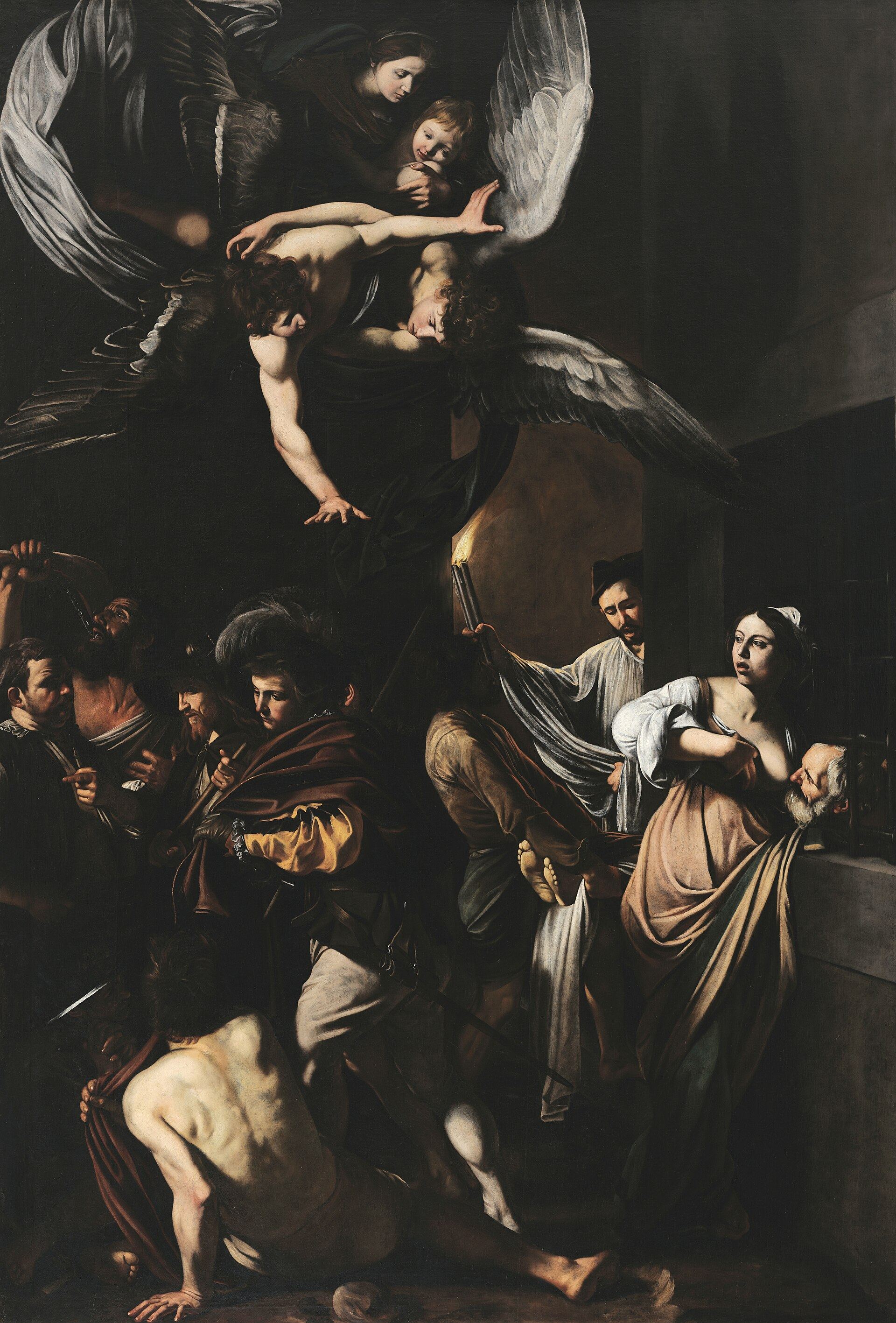
Crowded altarpiece painted for a Naples charity, showing ordinary people feeding the hungry, giving drink, clothing the naked, sheltering a stranger, visiting a prisoner, and burying the dead, with Mary and the child above them.

The Seven Works of Mercy, Michelangelo Merisi da Caravaggio, 1607.

Painted for a charity in Naples. Ordinary people feed, clothe, shelter, and visit prisoners. Nobody in the picture is asked to prove they deserve it.

Artwork information

Title: The Seven Works of Mercy

Artist: Michelangelo Merisi da Caravaggio

Date: 1607

Rights: Public domain (copyright expired)

Source record at Wikimedia Commons

Material help before a lecture

Food, shelter, safety, and medical care come first. Nothing on this page is offered as a substitute for them.

If you are hungry tonight, or unsheltered, or in withdrawal, or in danger, that is the first thing. Go to the help pages, call the services listed there, and come back to the reading later or never.

You are allowed to accept help without believing anything, without joining anything, and without answering questions that have nothing to do with what you asked for. Aid that arrives with conditions attached to your conscience is not charity in the Catholic sense.

If you are in a position to give rather than receive, the same principle runs in reverse: give in ways that do not require the other person to explain themselves.

Poverty is not moral failure

Scripture treats poverty as a condition to be relieved, not a verdict to be explained.

If you were taught that poverty is what happens to people who did not try, that idea did not come from the Gospel. It comes from a culture that finds it more comfortable to inspect the poor than to change anything.

Most poverty is produced by things no individual controls: wages that do not cover rent, medical bills, disability, caregiving, layoffs, discrimination, a family you were born into, a country you were born in. A single unpaid week can start a collapse that takes years to reverse.

Catholic social teaching names the structural side of this directly. It speaks of structures of sin, of the universal destination of goods, of a preferential option for the poor, and of a living wage as a matter of justice rather than generosity. It does not describe poverty as a personal defect.

Practically, this means the shame you carry about being poor was installed by other people. Being unable to pay is not a sin. Needing help repeatedly is not a sin. Using a food bank, applying for benefits you qualify for, or asking a parish twice is not taking something that belongs to someone else.

It also means you are not required to be grateful for scraps or to pretend that unjust conditions are the will of God. Wanting more for yourself and your family is not greed.

Addiction without caricature

A condition that responds to care, not a character that responds to shame.

Addiction is a health condition involving the brain, the body, and the circumstances a person is living in. It frequently grows out of trauma, untreated pain, grief, and mental illness. Naming that is not making excuses. It is describing what is actually happening.

Evidence based treatment exists and it works for many people. That includes medical care, medication for opioid and alcohol use disorder where a clinician prescribes it, therapy, inpatient and outpatient programs, peer support, and harm reduction services that keep people alive while they are still using. Deciding among these is a matter for you and qualified clinicians. This page does not give medical direction and no parish or volunteer should either.

Nobody should tell you to stop your prescribed medication in order to be more spiritual, more free, or more trusting of God. That advice is dangerous and has killed people. Medication for a substance use disorder is treatment, not a substitute addiction, and the Church has never taught otherwise.

Faith can genuinely help alongside care. Prayer, the sacraments, Twelve Step communities with their own long spiritual tradition, and an honest relationship with God have carried many people through recovery. They work beside treatment rather than in place of it.

Relapse is common and it is not apostasy. If you are using again after a period of not using, you have not forfeited God, the sacraments, or your worth. Return to care, and return to prayer, as many times as it takes.

If you are still using and not ready to stop, you are still welcome to pray, to read, to attend Mass, and to be treated with respect. Staying alive is the first goal. Everything else can follow.

Incarceration and reentry

There is no permanent moral exile in Catholic teaching.

Christ names visiting the imprisoned as something done to him. In Matthew 25 he says: whatever you did for one of the least of these brothers and sisters of mine, you did for me. He does not add a screening question about what the prisoner did.

If you are inside now, your baptism holds, your prayer counts, and God is not waiting outside the gate. Access to a chaplain, to the sacraments, and to Scripture is a legitimate request, and asking for it is not presumption.

If you are coming out, the practical wall is real: identification, housing that accepts a record, employment, transport, probation conditions, and debt that accrued while you were away. Reentry organizations exist for exactly this and they know the local systems far better than any general advice.

You are not required to introduce yourself by your conviction. In a parish, at a food program, or in a job interview, you disclose what the situation legally requires and nothing more. Anyone who treats your record as the whole of you has made a mistake about you and about the Gospel.

Guilt for real harm is different from the permanent shame the world assigns. Genuine wrongdoing can be confessed, absolved, and made restitution for where that is possible. What cannot be undone can still be carried differently. Neither the Church nor God recognizes a sentence that never ends.

Families outside carry their own version of this: the calls, the travel, the cost, the questions from neighbours. That grief is real and it deserves support rather than judgment.

Immigration status does not alter human dignity

Dignity is not issued by a government and cannot be revoked by one.

The Church teaches that human dignity belongs to every person by creation, before and beyond any legal category. No visa, permit, hearing, or refusal changes it. A person without documents is not a person without standing before God.

The Holy Family fled into Egypt because a ruler wanted a child dead. Scripture repeatedly commands care for the stranger, and Catholic social teaching affirms both the right of people to migrate in search of safety and a livelihood and the duty of communities to receive them with justice.

This page does not give legal advice, and no priest, volunteer, or website should. Immigration law is technical, changes often, and differs by country and by case. Speak with an accredited immigration lawyer or a recognized nonprofit legal service. Be cautious of anyone charging fees for form filling without proper accreditation.

You are not obliged to disclose your status to a parish, a food program, or a shelter, and a Catholic ministry should not be asking. If you are asked, you may decline and still receive help.

Fear of detention, separation from children, and the loss of years of work are heavy and constant. That exhaustion is a normal response to genuine danger. Support for it exists, including counselling that understands immigration stress.

Quick exit leaves this page immediately and opens a neutral search page. It cannot delete your browsing history: if someone may check your device, consider using a device they cannot access.

If a parish made you prove deservingness

What happened to you was a failure of that community, not a lesson from God.

Some people are asked, in effect, to audition for help. To explain their spending. To account for a tattoo, a phone, a cigarette, a child, a partner, a record. To sit through a talk before eating. To say thank you in the right tone, twice.

That is not what the Church teaches and it is not what Christ did. He fed crowds without a means test. He let himself be touched by people others considered unclean. He accepted hospitality from people the respectable had written off.

If it happened to you, you did nothing wrong by needing help, and nothing wrong by leaving. Trying a different parish or a secular service is a reasonable response, not a sulk. You may also ask another parish directly how their assistance works before you go.

If the treatment was abusive, discriminatory, or involved anyone with authority misusing it, you can report it to the diocese and to any relevant civil authority. You do not need permission to do that, and doing it is not disloyalty.

You are also allowed to stop asking. Some people who were humiliated once cannot walk back into a church office again. God is not withheld from you because of that.

What no one may require of you in exchange for help

A short list a parish can be held to, and a person receiving help can point at.

  • Require prayer, a religious conversation, a service, or a profession of faith before giving you food, water, clothing, shelter, or money.
  • Ask you to give a testimony, be photographed, be filmed, or appear in a newsletter or fundraising appeal.
  • Question you about your sexual history, immigration status, criminal record, or substance use when it is not needed to provide the specific help you asked for.
  • Expect visible gratitude, and treat you worse when you are tired, blunt, or unable to perform thankfulness.
  • Make continued help conditional on sobriety, church attendance, marriage, employment, or agreeing with them.
  • Discuss your situation with other parishioners, post about you, or point you out to anyone.
  • Keep you waiting as a lesson in patience, or speak to you as though you were a child.

How parishes can give aid with dignity

Practical standards for anyone running or volunteering in a parish ministry.

Give first, ask nothing beyond need

Collect only what is required to provide the specific help: what is needed, how many people, any allergies or medical constraints, and how to reach the person if that is wanted. No intake interview about a person's past, no proof of worthiness, no registration requirement.

Never attach prayer as a price

Offer prayer as an option, once, and let no answer be the end of it. A person who declines should receive exactly the same help, in the same tone, as a person who accepts. Prayer that functions as a toll is not prayer.

Protect privacy as a rule, not a courtesy

Keep records minimal, stored securely, and separate from parish directories. Do not name recipients in bulletins, homilies, or grant reports. Do not photograph anyone receiving aid.

Make the space physically dignified

Choose a room with seats, a door, water, and a bathroom. Avoid long queues in public view. Let people select their own food where possible rather than receiving a bag chosen for them.

Assume competence

People who survive on very little manage complex logistics daily. Ask what would help rather than deciding for them. Cash, gift cards, and bus passes are often the most useful and the least controlling forms of aid.

Train volunteers, and correct them

One volunteer who lectures, interrogates, or moralizes can undo the work of a whole ministry. Say plainly in training what is not permitted, and act when it happens rather than protecting the volunteer.

Know your limits and your referrals

Keep a current list of legal aid, shelters, harm reduction services, food programs, reentry organizations, and mental health providers. Refer early. A parish is not a substitute for professional care and should not pretend to be.

The test is simple. If a person receiving help would describe the encounter as being treated like an adult and a neighbour, the ministry is working. If they would describe it as being processed, examined, or preached at, something needs to change regardless of how much food went out the door.

Prayers for hard seasons

Short, plain, and written for people with no energy for long words.

A prayer when the money runs out before the month does

God, the numbers do not work and I have counted them many times. Send real help through real people. Keep me from despair while I wait, and keep my dignity intact in every office I have to sit in. Amen.

Original prayer from Thorns & Light

A prayer for a night without a bed

Lord, you had nowhere to lay your head, so you know what this hour feels like. Keep me safe until morning. Send me somewhere warm. Do not let me be treated as though I stopped being a person. Amen.

Original prayer from Thorns & Light

A prayer for today only, in addiction

Christ, I am not going to promise you forever tonight. I am asking for the next hour. Be with me in it. Send me someone who knows how to help, and keep me alive to meet them. Amen.

Original prayer from Thorns & Light

A prayer from inside a cell

God, they can name me by a number. You know my name. Sit with me in this room. Keep something in me that this place cannot take, and be with the people I cannot reach tonight. Amen.

Original prayer from Thorns & Light

A prayer for papers, borders, and waiting

Lord, my life is being decided by forms and strangers. You were carried into another country as a child. Watch the road ahead of me, guard the people I love on both sides of it, and let me be met with mercy. Amen.

Original prayer from Thorns & Light

A prayer for the work I am doing to survive

God, this is not the life I would have chosen, and I am doing what keeps us fed. Do not let me be reduced to it. Keep me safe in it. Give me a way out that does not cost me the people who depend on me. Amen.

Original prayer from Thorns & Light